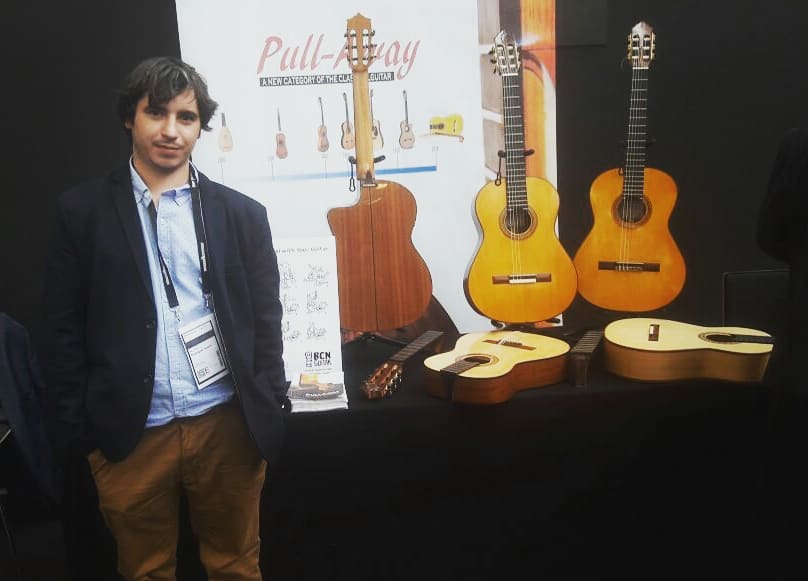
It was December 2015 in Capilla del Monte, a small city at the foot of the Sierras Chicas in Córdoba, Argentina, when luthier Nicolás Rodríguez Guerra received a commission that would change his life — and perhaps the history of the guitar.
Guitarist Luis Soria, a musician accustomed to airports and European concert halls, set him a challenge that was as simple to state as it was complex to solve: I need a guitar I can take on a plane without paying excess baggage charges, without checking it into the hold, and without risking that it arrives broken on the other side of the world. Soria knew, with the intuition of someone who had spent years traveling with an instrument under his arm, that in Europe there was a real unmet need.
Nicolás listened. And went to work.
A Cut at the 12th Fret
What Rodríguez Guerra developed in that Argentine workshop had no precedent. For centuries, different luthiers and makers had explored the concept of the detachable-neck guitar — always resorting to screws, metal plates, hardware. Functional solutions, but foreign to the wooden soul of the instrument.
Nicolás went further. And he did it differently.
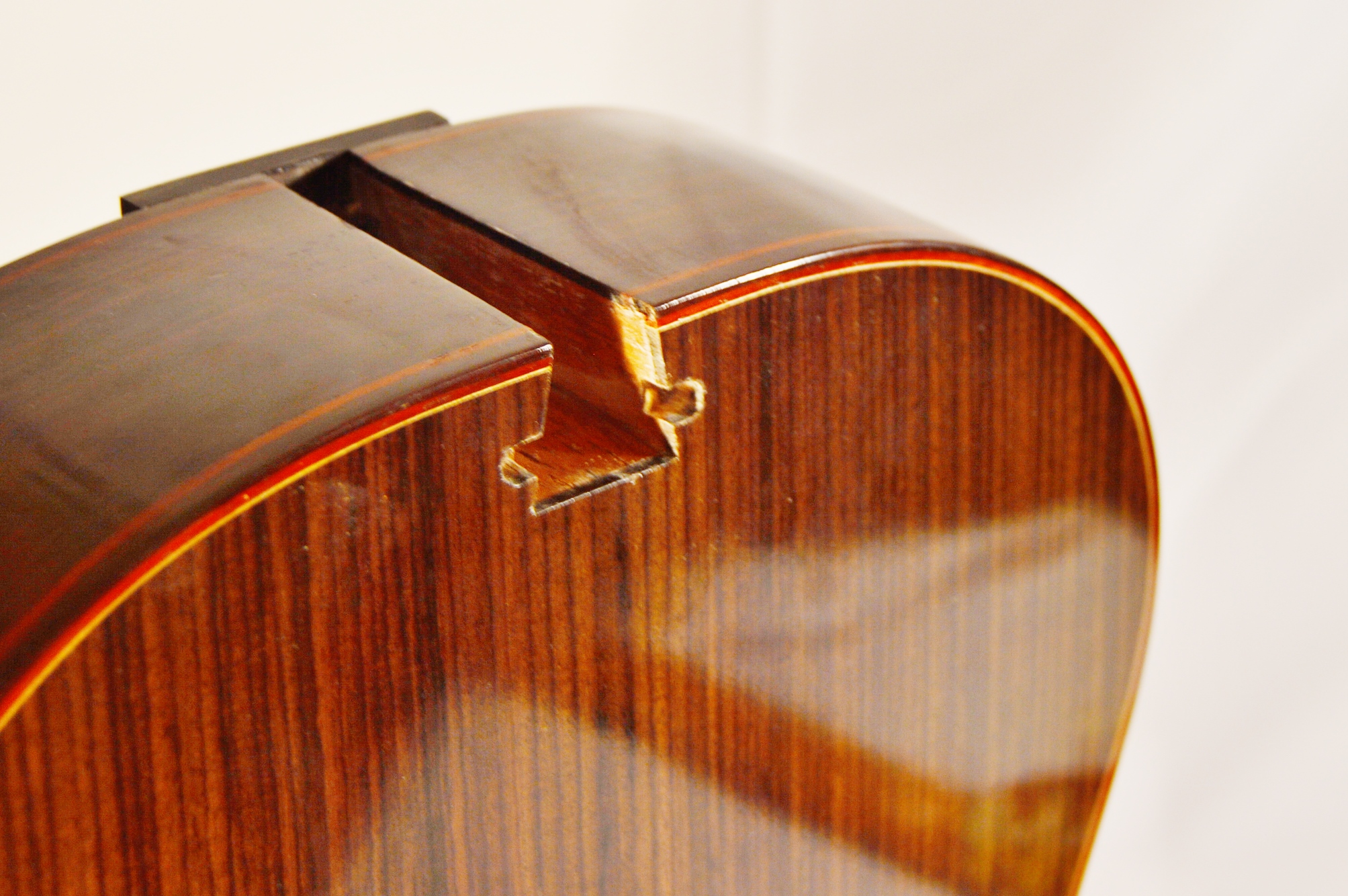
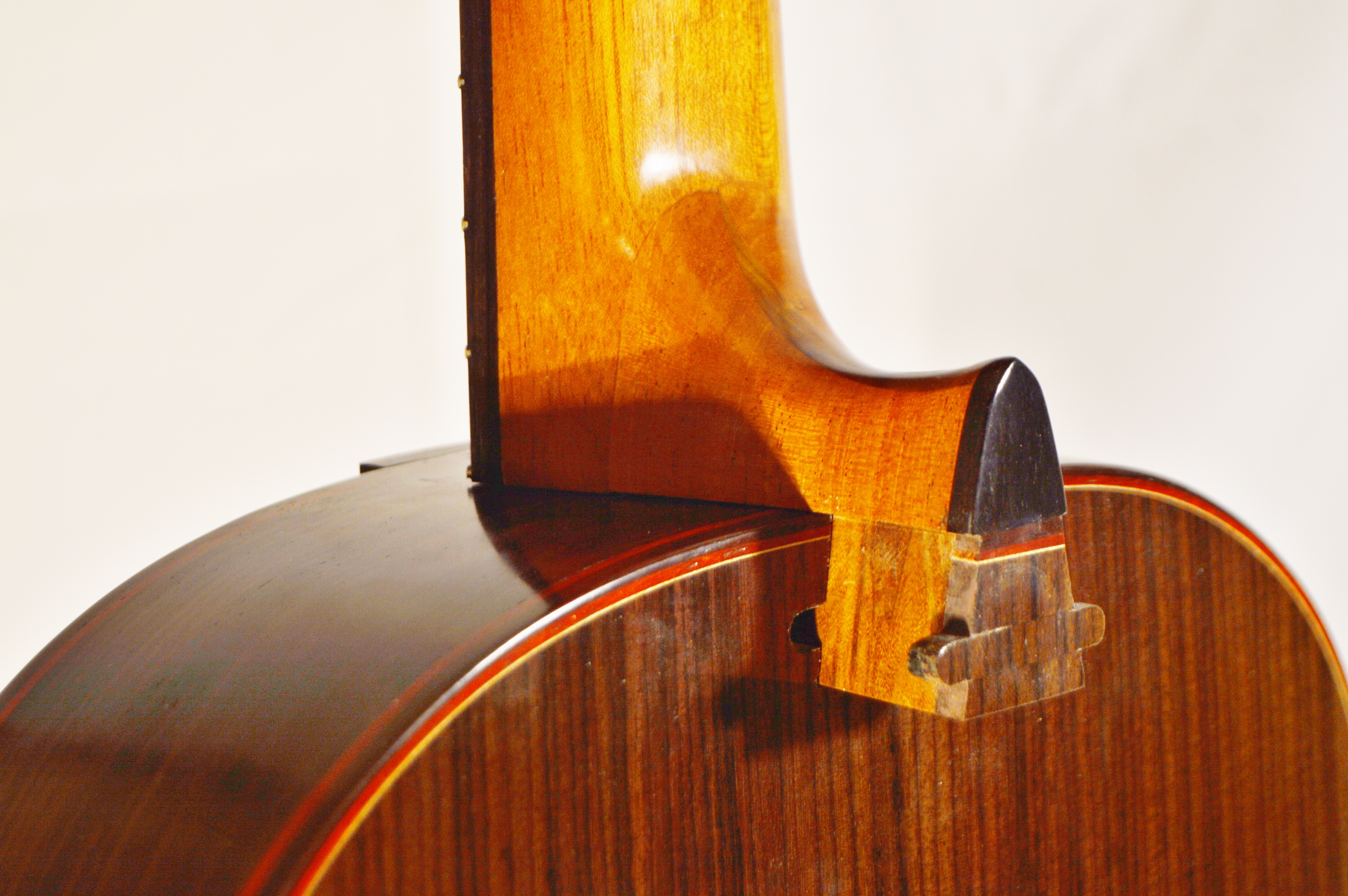
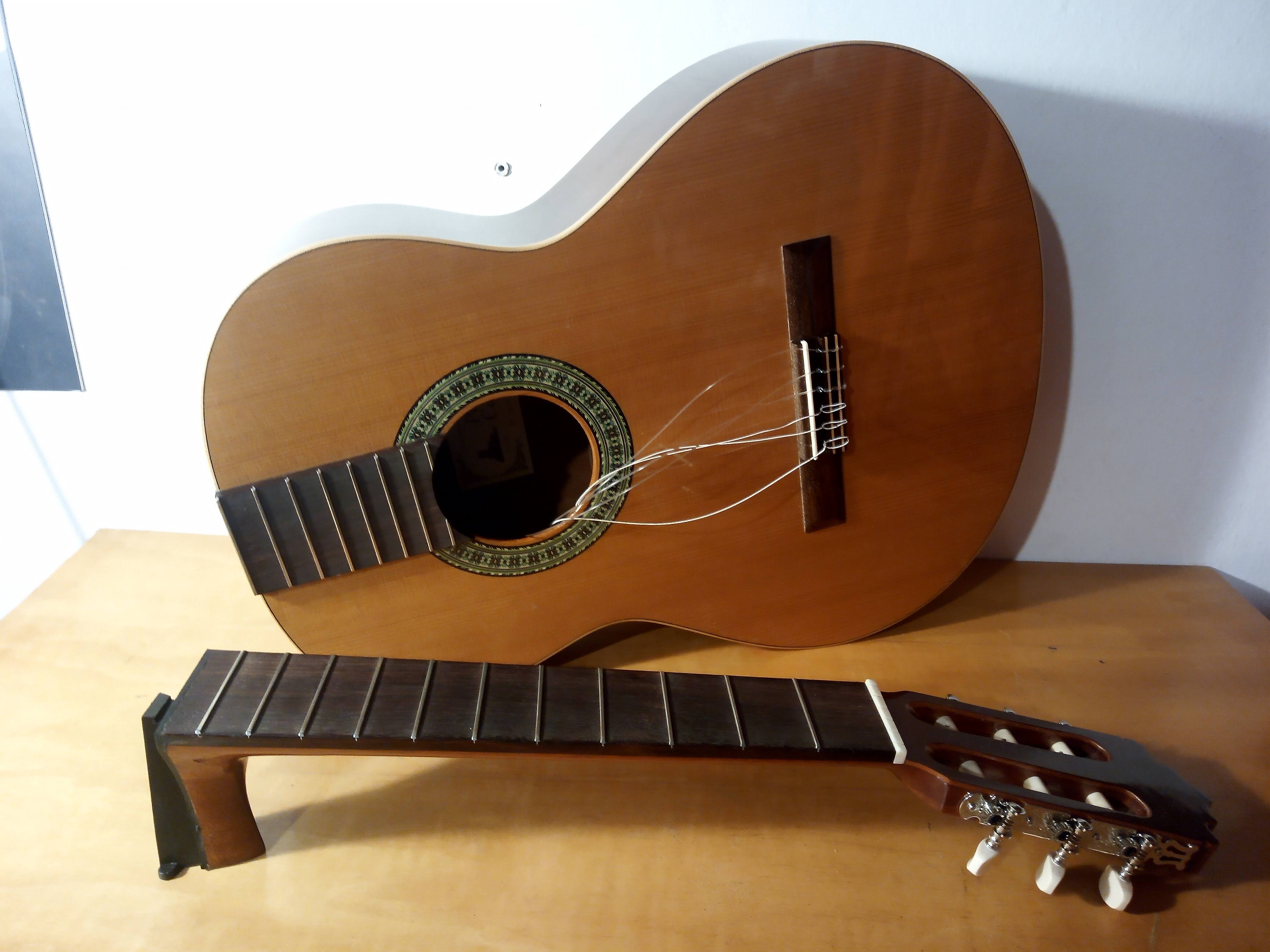
His system, which he named Pullaway, divides the guitar exactly at the 12th fret — the midpoint of the scale, where the fingerboard meets the body — into two perfect pieces. The secret lies in a dovetail joint, an inverted trapezoid-shaped union borrowed from high-precision woodworking, reinforced with two locks, one at the front and one at the back, which guarantee that the instrument remains firm, structured and stable as if it had never been cut. All in wood. Without a single screw.
Before this, nobody had split a guitar at the 12th fret
"Before this, nobody had split a guitar at the 12th fret dejando dos partes del diapasón", resume con calma quien lo hizo por primera vez. La primera guitarra Pullaway, construida en ébano, funcionó a la perfección desde el primer intento. Con los años el diseño se fue afinando, las medidas mejorando — pero la base estaba ya en aquella primera pieza, intacta y revolucionaria.
From the Andes to Barcelona

With the invention under his arm and high expectations, Nicolás Rodríguez Guerra crossed the Atlantic. In 2016 he arrived in Spain for the first time to present the system at guitar festivals. In 2017 he settled permanently in Barcelona.
The first years were hard.
In Spanish and European lutherie circles, the Pullaway system was received with skepticism. An Argentine luthier with an idea that sounded too simple to be true, in a field where tradition weighs as heavily as cedar wood. "It was greatly underestimated," he acknowledges today without bitterness. Making a mark required years of presentations, patience, and convincing top-level clients one by one until word of mouth began to work.
Then the pandemic arrived. COVID-19 brought the project to an abrupt halt — as it stopped so many things — and Nicolás had to begin again. Once more from the start, with the same conviction as always.
The Conversion Method: Any Guitar Can Become Pullaway
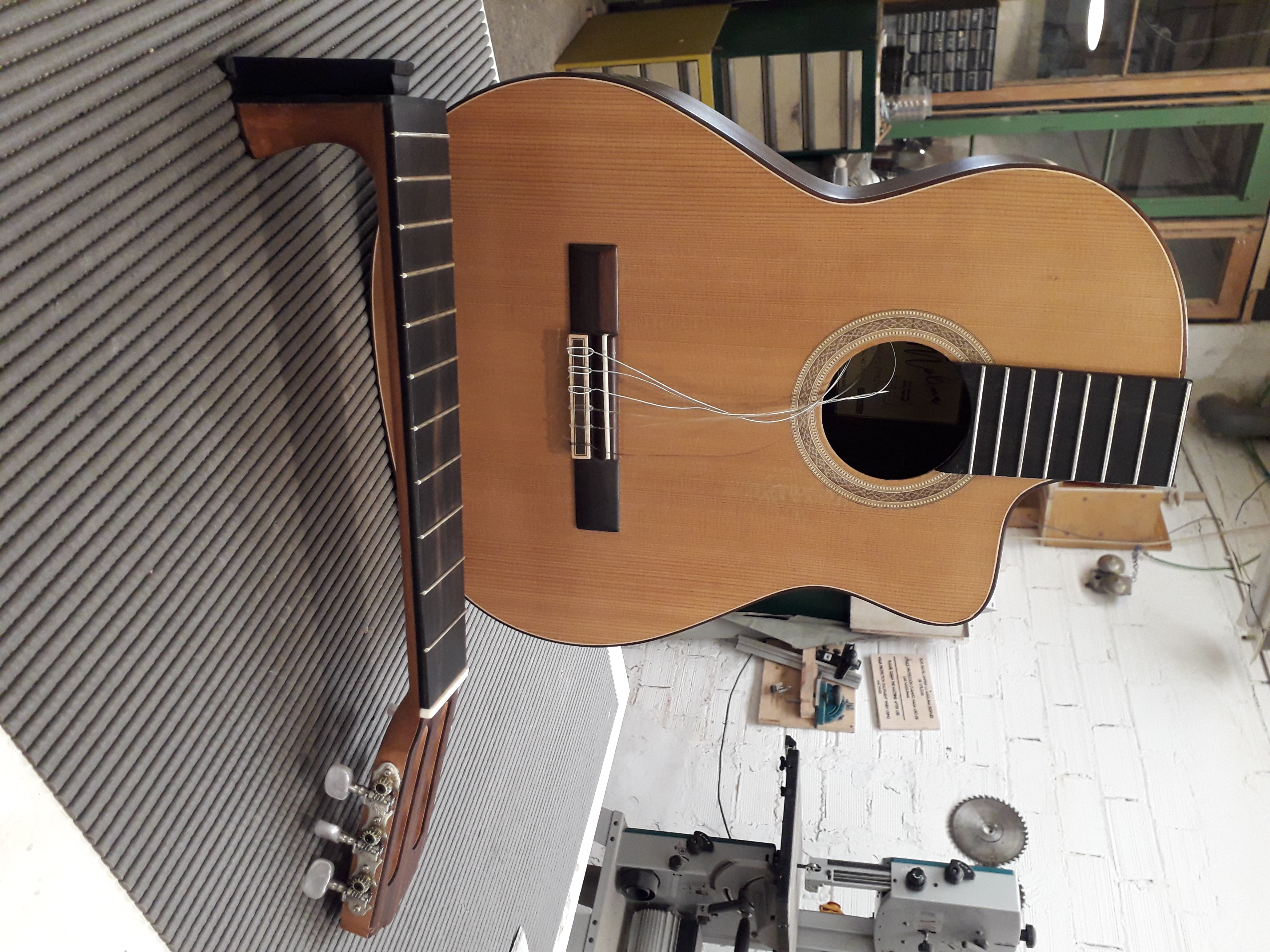
The qualitative leap came when Nicolás developed something that took the invention to another dimension: a conversion method. There was no need to buy a new guitar. Any existing guitar — student model, factory-made, from a recognized brand, or from a renowned luthier — could be converted to the Pullaway system.
The process is surgical: the guitar is cut at the exact point of the 12th fret, a dovetail tenon is carved into the neck, and a millimetric female slot is worked into the body so the fit is perfect. The result is an instrument that separates in seconds into two pieces that fit inside a cabin backpack, and that, once joined again, responds like a conventional guitar in sound, tuning and feel.
The price of the conversion: 220 euros. A modest figure compared with the cost of checking an instrument on every flight, or the risk of losing it in the hold.
To date, more than 200 guitars have passed through Nicolás's hands. From entry-level instruments to high-end guitars from leading makers and luthiers.
The Masters Who Trust It

The most eloquent endorsement does not come from fairs or catalogs, but from the names who have decided to entrust their instrument to the Pullaway system. Guitarists such as Mauricio Díaz Álvarez, Paco Seco and Jaume Torrent — unquestioned references in classical guitar — now use this system. When musicians of that caliber endorse an invention with their name and their instrument, the initial skepticism is reduced to anecdote.
The Man in the Convertible
Entre los más de doscientos clientes hay historias de todo tipo. Pero Nicolás guarda con especial afecto una reciente, ocurrida en el actual taller en Les Arques, France, pequeño pueblo del Lot donde hoy se reciben y envían guitarras a todo el mundo.
Just a few days ago, a guitarist showed up there driving a convertible sports car — one of those with a tiny trunk, more sculpture than automobile. The reason for his visit was perfectly logical: he wanted a Pullaway guitar because, quite simply, no other guitar would fit in his car. The detachable guitar, designed for airplanes, had found a new problem to solve.
A New Category in Guitar History
When Nicolás Rodríguez Guerra is asked what his dream is, he does not talk about figures or markets. He talks about something larger.
That Pullaway becomes another category of guitar
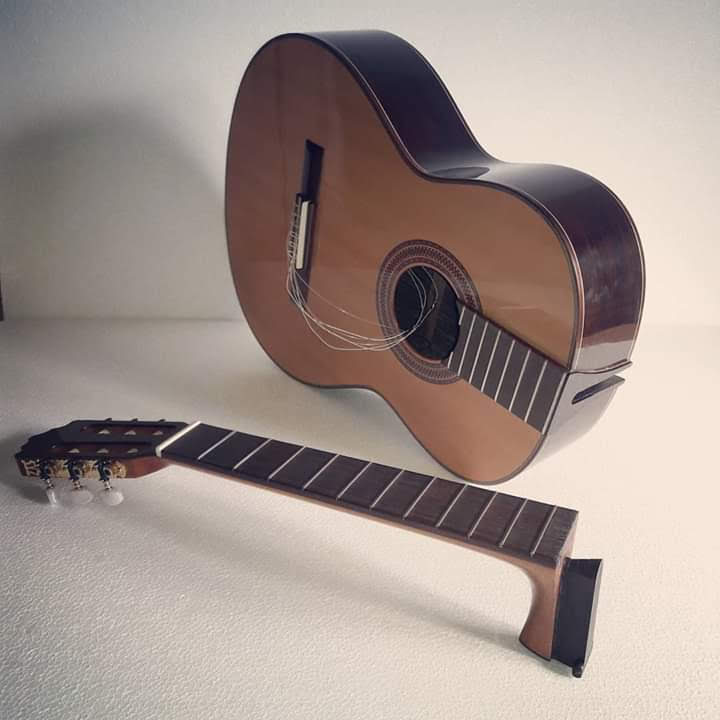
Just as there is the classical guitar, the flamenco guitar, the acoustic guitar or the electric guitar, he dreams that the detachable guitar — his detachable guitar — will one day occupy its own place in the history of the instrument. Not as an accessory or a traveler's trick, but as a legitimate and recognized way of conceiving the guitar.
For someone who in December 2015 took a piece of ebony in a workshop in the Argentine hills and cut a guitar the way no one had cut one before, it does not sound like a far-fetched dream.
Nicolás Rodríguez Guerra puede ser encontrado en Instagram como @nicolasrodriguezguerra.luthier. Las guitarras Pullaway se construyen y transforman en Les Arques, France, y se envían a todo el mundo.
Pullaway Archive
Six images to close the journey: process, concert, technical detail and the travel logic that gave rise to the system.